Three categories of Brantford-area home that don't fit the standard buyer profile and need their own buying playbook: waterfront along the Grand River, acreage in Brant County, and heritage homes in central Brantford. Each has a small inventory, a specific buyer pool, and trade-offs that catch first-time specialty buyers off guard.
I've sold all three. Here's the read.
Brantford waterfront
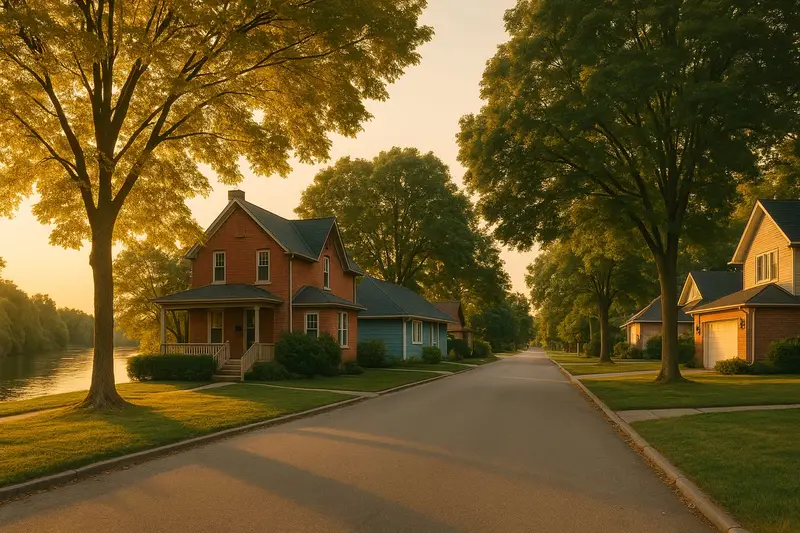
Brantford has more waterfront than most people realize. The Grand River runs through the city for over 25 kilometres, and there are pockets of true waterfront homes — direct river access, view, and frontage — in several neighbourhoods.
Where the waterfront is:
- Henderson and Ava Heights — the most established waterfront in the city. Ava Heights especially. Big lots, big homes, long drives down to the river. Premium neighbourhoods.
- Eagle Place south end — pockets of riverfront, generally less premium pricing than Henderson, lots of variability.
- Holmedale flats — older waterfront cottages-turned-homes along the Grand. Charming but flood-zone considerations are real.
- Mt. Pleasant rural — south of the city, larger riverfront properties on acreage. Different buyer pool.
- Paris — the Grand and Nith rivers both flow through Paris, with downtown waterfront blocks and a few suburban sections that back onto the water.
What waterfront actually costs:
A Henderson waterfront home runs 30-50% above the comparable non-waterfront in the same area. So a $700K Henderson detached without river frontage compares to a $900K-$1.05M waterfront. Paris waterfront commands a similar premium over non-waterfront in town.
Eagle Place waterfront is the value play — sometimes 15-25% over non-waterfront, with similar river views. The trade is the surrounding neighbourhood.
What waterfront trades:
- Insurance. Waterfront insurance in Ontario has gotten difficult. Some carriers won't write at all for properties within flood-mapped zones; others charge meaningfully more. Check insurability before you offer, not after.
- Flood zone realities. The Grand River Conservation Authority maps flood plains. Some of the prettiest "waterfront" lots are partially in flood-prone zones, which limits what you can build, renovate, or insure.
- Maintenance. Waterfront properties have docks, retaining walls, riprap, drainage that doesn't exist on suburban lots. Budget $3K-$8K/year just for waterfront-specific upkeep.
- Resale pool is smaller. When you go to sell, the buyer pool is narrower. Days on market are typically longer than the surrounding non-waterfront market.
The good ones are spectacular. The bad ones are money pits. Inspection plus a separate flood / GRCA review are non-negotiable.
Brant County acreage
Acreage is where Brant County beats every adjacent municipality on price-per-acre and zoning friendliness. Three categories:
Hobby farms — 2-10 acres with a primary residence, possibly a barn or outbuilding. Common around Burford, Oakland, Scotland and Mt. Pleasant rural. $750K-$1.4M typical for a usable hobby farm. Most have a well and septic — confirm both pass an inspection.
Working farms — 25+ acres, agricultural zoning, often a farmhouse + multiple outbuildings. $1.2M-$3M+ depending on land quality, water rights, frontage. Different financing entirely (commercial agricultural mortgages, not residential).
Country lots — typically 1-3 acres with a house, outside village cores. The rural fringes around St. George, east of Paris, and through the rural townships have these. $850K-$1.4M typical. Premium goes to lots with an outbuilding the buyer can use as a workshop or studio.
What acreage trades:
- Well and septic. Two systems you need to understand before closing. Get a flow test on the well (gallons-per-minute matters), get the septic pumped and inspected. A failed septic in Brant County can cost $20K-$45K to replace.
- Heating bills. Most rural homes don't have natural gas. Propane, oil, or heat pump. Heating a 2,500 sq ft rural home in Brant County winter on propane runs $3,500-$5,500/year.
- Driveway maintenance. A 200-metre driveway needs grading, drainage, snow clearing. Add it to the budget.
- Internet. Some rural pockets still have weak internet. Bell Fibe is rolling out but isn't everywhere. Confirm coverage before you commit, especially if you work remote.
- Zoning. What looks like a "working horse property" may be zoned in a way that doesn't allow boarding or breeding. Always confirm zoning matches your intended use.
Who acreage works for:
People who genuinely use land — gardeners, hobbyists, trades with workshop needs, horse people, home-based business owners. Doesn't work for people who want "more space" but won't actually use the space. The maintenance overhead is real and real money.
Brantford heritage homes
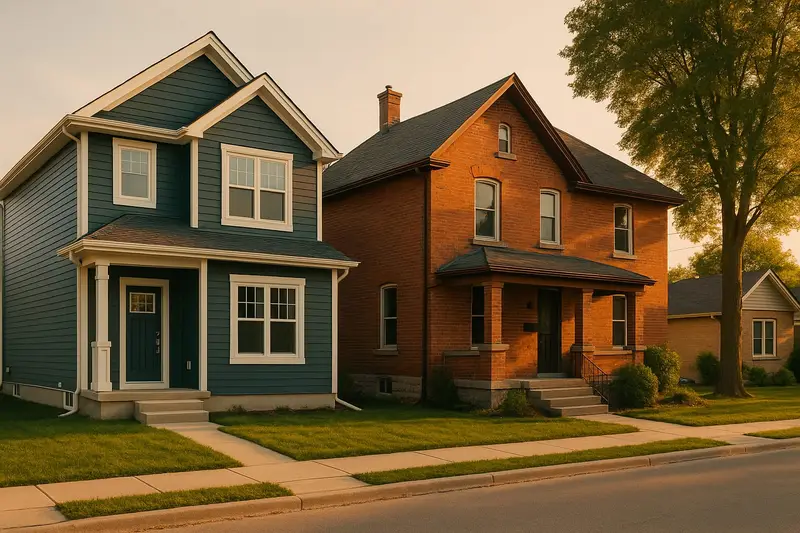
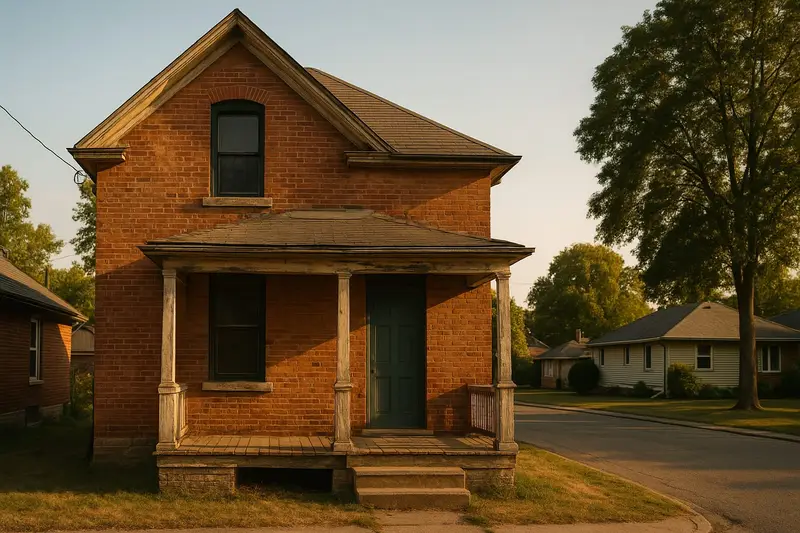
Brantford has a stronger heritage home stock than most Ontario cities its size. The downtown core, North Ward, East Ward, and Holmedale have neighbourhoods of late-1800s to early-1900s homes, many with original architectural detail. Some are designated heritage properties; many more are unofficially heritage by character.
The price range:
- Renovated heritage, well-maintained, modern systems but historic character preserved: $700K-$1.1M for the good ones.
- Mid-condition heritage, livable but needs cosmetic work: $475K-$650K.
- Project heritage, structurally sound but everything else dated: $375K-$525K. Real fixer-upper money.
What heritage trades:
- Layout. Smaller rooms, less open-concept, kitchens often added on as awkward back-of-house additions. Modern "live-in-the-kitchen" lifestyles don't always fit.
- Systems. 60-amp electrical, knob-and-tube, galvanized plumbing, single-pane windows are common in unrenovated heritage. Each one is expensive to fix. Total electrical+plumbing+window upgrade on a typical 1900 home: $35K-$60K.
- Insulation. Often minimal in walls. R-values that fail current code. Heating costs reflect that.
- Designation rules. Designated heritage homes have rules about what you can change on the exterior. Often invisible from the inside (you can renovate kitchens freely) but matters for additions, windows, and cladding.
The reward:
You can't manufacture heritage. The 11-foot ceilings, the original wood trim, the leaded windows, the hand-laid brick — all of it is value that compounds over decades. A well-restored 1898 home in Holmedale holds value through downturns better than a comparable 2005 detached.
See what homes actually sold for.
Register free for Insider access — sold prices the portals don't show, new listings before everyone else, and my honest monthly read on the Brantford market. No spam, unsubscribe anytime.
What I tell specialty-home buyers
Three things across all three categories:
1. Specialist inspection. A general home inspection isn't enough. Waterfront needs a GRCA flood-zone review. Acreage needs a well-flow test plus septic inspection. Heritage needs an electrical system survey and ideally a structural review of the foundation.
2. Insurance pre-clearance. Get an insurance quote before you firm up the offer. Specialty homes can be uninsurable or extremely expensive to insure. Better to find out during the conditional period.
3. Hold period of 7+ years. Specialty homes have smaller buyer pools, longer days on market, and more transaction friction. The shorter your hold, the worse the math. Plan to live there a long time or don't buy.
The specialty markets in Brant County are smaller and more interesting than the standard subdivisions. They reward patience, the right inspection process, and the right buyer. Done right, they're some of the best homes you can own in this region. Done wrong, they're some of the worst.